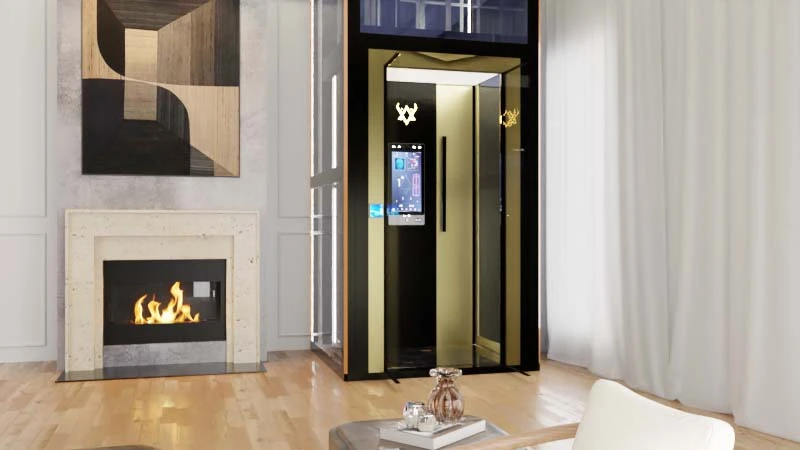
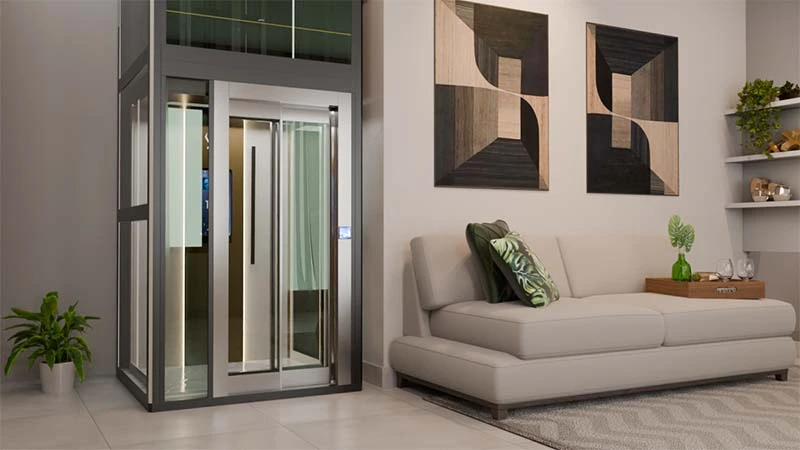
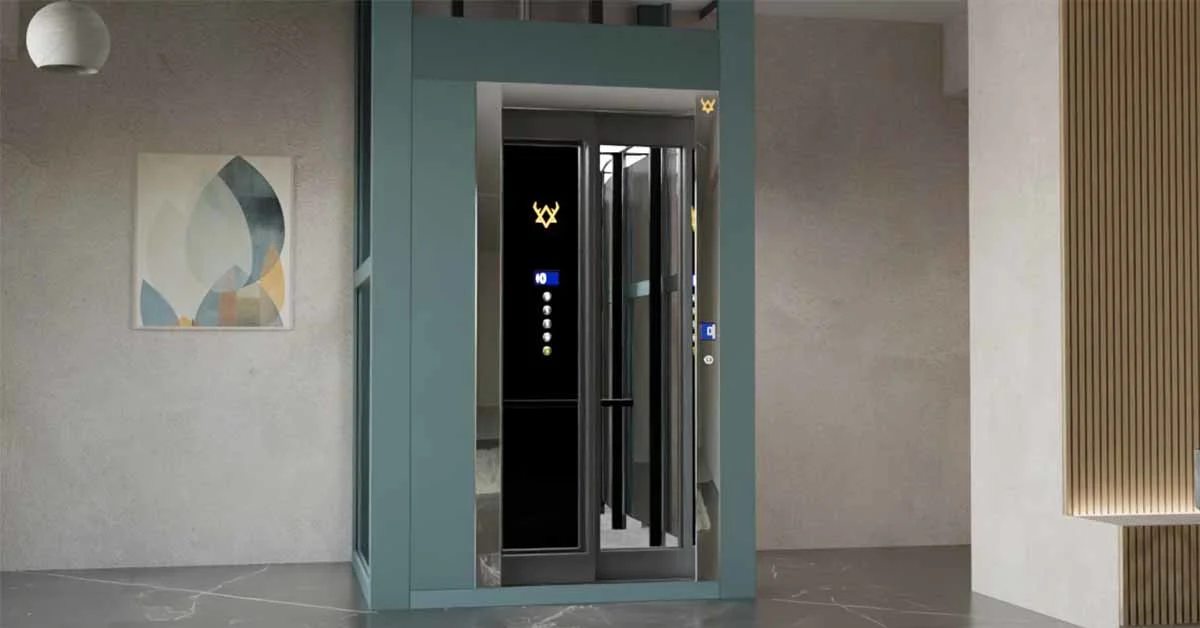
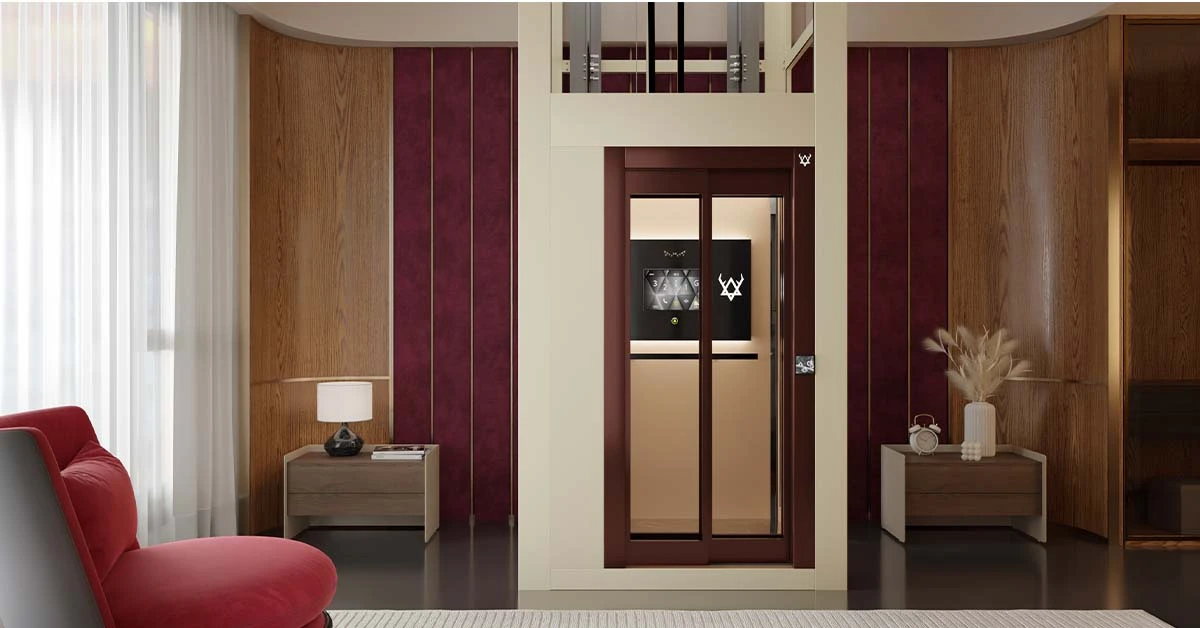
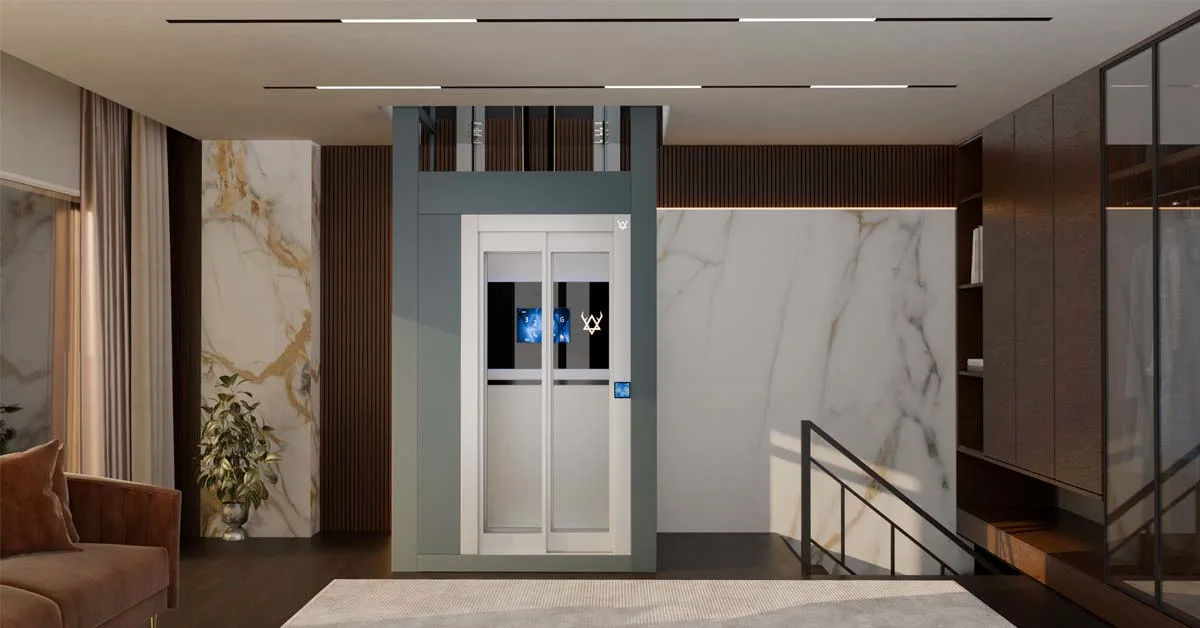
The home elevator price in Andhra Pradesh usually starts at around ₹14 lakhs and can go to ₹50 lakhs or more. The final number depends on a few things — the lift technology you choose, the number of floors, the cabin design, and how your home is built. There’s no single fixed price, because every home is different in its layout, structure, and daily needs.
This guide breaks down home elevator price in Andhra Pradesh, explained in simple, accessible terms. covers the different lift technologies, price ranges, what affects the cost, and what to check before you invest in one for your home.
Across Andhra Pradesh, the home elevator price usually falls between ₹14 lakhs and ₹50 lakhs. More and more homeowners in growing cities like Visakhapatnam (Vizag), Vijayawada, Guntur, and Amaravati are choosing to install home lifts. It’s not just for elderly parents or grandparents anymore — many families now see it as an everyday convenience.
Here are a couple of quick examples to help you understand where your home might fall in this range:
A simple home lift for a two-floor house (G+1) usually costs less, sitting at the lower end of the price range.
A bigger villa with three or four floors, a larger cabin, and premium interior finishes will cost more. This is because the lift needs to travel a greater height and requires extra safety features.
This price range is just to give you a rough idea — not the final word. The exact residential lift cost for your property can only be confirmed after a proper site visit. Things like the space available for the shaft, the power connection at your home, and the height between floors all play a part in the final price you’re quoted.
Before getting into pricing, it helps to understand the different lift technologies available today. Each one works on a different mechanism, and that directly affects the home lift price, maintenance needs, and how long the system lasts.
Gearless elevators use a motor-driven pulley system connected to belts or steel ropes, along with a counterweight, to move the cabin smoothly between floors. Because there are fewer moving mechanical parts than older systems, they run quietly and need very little upkeep over time.
Homeowners usually choose this technology when:
The house has 3 or more floors
Smooth, vibration-free travel is a priority
Long-term low maintenance matters more than the upfront price
A hydraulic home elevators for home use works through a piston and fluid-pressure mechanism. Oil is pushed into a cylinder, which raises the piston and lifts the cabin; releasing the pressure brings it back down gently.
This is one of the most widely chosen options for independent houses and villas in Andhra Pradesh because it offers:
Stable, smooth movement
Strong lifting capacity
A more budget-friendly entry point compared to gearless systems
Hydraulic systems may need slightly more civil preparation, such as a small pit, but they remain a dependable and tested choice for low to mid-rise homes.
Vacuum lifts move using air pressure differences inside a sealed tube. They are considered only in specific cases — usually when there’s genuinely no room for a shaft or conventional structure. While they save space, they come with some trade-offs, including dependency on consistent air pressure and comparatively limited load capacity.
This is an older mechanical technology where a motor turns a threaded screw to move the cabin. It works, but it generally involves more moving parts and higher servicing needs over the years compared to gearless or hydraulic systems.
| Lift Technology | How It Works | Ride Comfort | Rating | Best Suited For |
|---|---|---|---|---|
| Gearless Traction | Motor-driven pulley with belts/steel ropes and a counterweight | Ultra-smooth, vibration-free | ⭐⭐⭐⭐⭐ | Homes with 5+ floors, premium feel |
| Hydraulic | Piston moved by fluid pressure in a cylinder | Smooth, stable | ⭐⭐⭐⭐ | Independent houses and villas, strong load capacity |
| Vacuum (Pneumatic) | Air pressure difference inside a sealed tube | Moderate | ⭐⭐⭐ | Spaces with no room for a shaft or pit |
| Screw-Driven | The motor turns a threaded screw to move the cabin | Average | ⭐⭐ | Older installations; fewer choices for retrofits |
Since the lift technology has the biggest influence on pricing, here’s a simplified comparison to help you understand where each option stands.
| Lift Technology | Approximate Price Range | Maintenance Level |
|---|---|---|
| Gearless Traction Elevator | ₹18 Lakhs – ₹50 Lakhs | No AMC |
| Hydraulic Home Elevator | ₹15 Lakhs – ₹40 Lakhs | Low |
| Vacuum (Pneumatic) Lift | ₹14 Lakhs – ₹26 Lakhs | Medium |
| Screw-Driven Lift | ₹14 Lakhs – ₹22 Lakhs | High |
Note: The prices shown above are indicative figures based on general market trends. Your actual residential lift cost will be confirmed only after our technical team evaluates your home’s specific layout and requirements.
No two homes are priced the same way. Here are the main factors that move the needle on your final quotation.
The more floors a lift has to serve, the higher the cost — simply because travel height increases, more landing doors are needed, and additional safety systems come into play. A G+1 home lift will always be more affordable than a G+3 or G+4 installation.
As shown in the comparison table above, gearless systems usually sit at the premium end, while hydraulic lifts offer a more practical mid-range entry point. Vacuum and screw-driven systems are priced based on the specific space constraints they solve. Your choice of technology has the single biggest impact on the final residential elevator cost.
Home lifts are commonly available in 2-passenger, 3-passenger, 4-passenger, and wheelchair-accessible configurations. A larger cabin needs a stronger motor and wider doors, which adds to the cost.
Glass panelling, designer wall finishes, automatic doors, and smart touch controls all add to the base price. A simple finish keeps the lift cost for home installations on the lower side, while a fully customized cabin pushes it higher.
Pit depth, shaft availability, headroom, and whether the home is under construction or an existing building all influence the final price. New constructions are generally smoother and slightly more cost-efficient to install, since the shaft can be planned.
Elevators tested and certified by recognised bodies such as TÜV SÜD may carry a marginally higher upfront cost, but they offer tested reliability and long-term safety, which matters far more than saving a small amount upfront.
Price should never be the only factor when choosing a home lift. Since this is something your family will use daily — including children and elderly members — safety has to come first. Look for:
Prevents operation if the weight exceeds the rated capacity.
Stop the doors from closing if something or someone is in the way.
For immediate communication if assistance is needed.
Independent certification, such as TÜV SÜD, is one of the most reliable ways to confirm that an elevator meets recognised international safety norms rather than just manufacturer claims.
Understanding the general installation flow helps you plan timelines realistically.
Depending on the technology chosen, this may include minor pit work or shaft preparation. Many modern home lifts need little to no civil work.
Once specifications are finalised, the cabin and components are built and quality-tested, typically over 4 to 8 weeks, depending on customization.
Most home elevators run on single-phase power and can be installed within a few days for standard configurations.
Load testing, safety checks, and sensor calibration are completed before the lift is handed over for daily use.
Installing a home elevator is a decision you’ll live with for years, not just a one-time purchase. An elevator is a long-term investment, used daily by your family for years. Beyond the home elevator price, homeowners in Andhra Pradesh should also weigh safety, reliability, and after-sales support before finalising a provider. Here’s what sets Stag Elevators apart:
At Stag Elevators, these are the products we offer to suit different homes and budgets:
Ultra Gearless Home Elevators
Gearless Home Elevators
Hydraulic Home Elevators
Platform Lifts
Whichever option you choose, every lift is custom-built around your home’s layout, not offered as a fixed, standard unit.
No two homes in Andhra Pradesh are built the same way. Plot size, staircase position, and floor height vary from one villa to another, which is why we don’t offer a fixed, one-size-fits-all unit. Every lift we install is designed around your available space, number of floors, and structural layout — whether that’s a hydraulic lift for home use in a compact independent house or a gearless traction system for a taller villa. This custom approach reduces structural compromises and ensures a smoother, longer-lasting installation.
Pricing alone shouldn’t decide which home elevator you choose. Our home elevators are built to comply with international safety standards and independently certified by TÜV SÜD, which means every unit goes through rigorous testing for structural integrity, electrical safety, and emergency rescue functionality before it ever reaches your home. This gives you tested reliability backed by a recognised third party, not just a manufacturer’s claim.
The home elevator cost doesn’t end at installation — ongoing maintenance adds up over the years if the technology isn’t engineered well. We focus on systems that reduce mechanical wear and servicing frequency, and selected models come with zero annual maintenance cost (zero AMC). This helps you plan your long-term residential elevator cost with far fewer surprises down the line.
Most of our residential models are designed to work without a deep pit, machine room, or major structural alterations. This matters especially for retrofit projects in existing Andhra Pradesh homes, where heavy civil work isn’t always practical. Whether you’re adding a hydraulic lift for home use beside an existing staircase or fitting a gearless system into a newly built villa, our installations are designed to minimise disruption to your home.
Unlike commercial elevators, residential home lifts installed by Stag Elevators typically don’t require a separate government license for use in private homes. This removes a layer of regulatory delay that often slows down installation timelines, letting you move from site inspection to a working lift faster.
Most homes in Andhra Pradesh run on single-phase power connections, and our residential elevator range is built to work within that setup. This avoids the need for expensive electrical infrastructure upgrades that commercial-grade systems often demand.
A home elevator is only as good as the support behind it. With a dedicated technical team covering Andhra Pradesh and Telangana, we handle everything end-to-end — from the first site visit and technical assessment, through manufacturing, installation, and final safety testing, to long-term after-sales service whenever you need it.
A truly well-engineered home elevator brings together safety, long-lasting durability, and costs you can predict over time. The right provider — not just the lowest house elevator cost — ensures peace of mind for your family for years to come.
Every home is different, and the only way to get an accurate home elevator Cost for your property is through a proper site evaluation. Whether you’re building a new villa or upgrading an already-built home, our team can guide you on the right technology, size, and budget for your space.
📞 India: +91-9900111082
📞 Dubai: +971-567894252
✉️ Email: info@stagelevators.com
🌐 Website: https://stagelevators.com/contact-us/
Our team will walk you through technology options, safety standards, space planning, and installation timelines — with complete transparency on pricing.
Understanding the home elevator price in Andhra Pradesh helps you plan your budget with confidence instead of guessing. The right choice depends less on finding the cheapest option and more on matching the technology, cabin size, and safety standard to your home’s actual structure and your family’s needs.
A proper site inspection remains the most reliable way to get an accurate quote — connect with the Stag Elevators team for a transparent, no-obligation consultation tailored to your home.
Vinoth Kannan is the CTO and Co-Founder of Stag Elevators, bringing years of technical expertise in designing safe and reliable home elevator systems. He leads the engineering, product innovation, and TÜV SÜD–certified quality processes that power Stag’s European-standard home lifts. His work ensures homeowners receive trusted, high-performance elevator solutions built for the future.
Call Us Now:
India: +91 9900111082
Dubai: +971 567894252