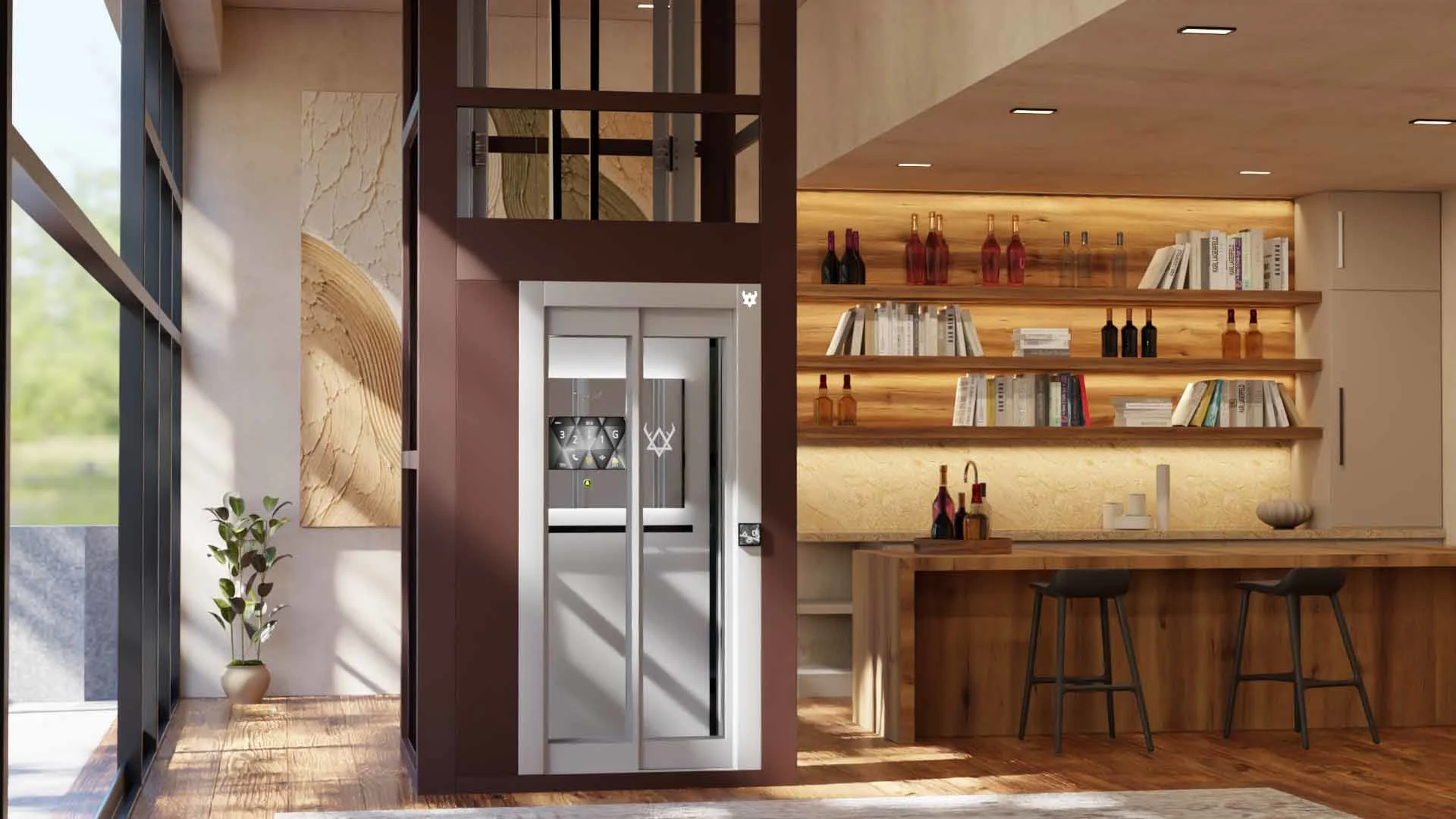
Home Elevators vs Commercial Elevators: Key Differences Explained
In This Guide
Key Takeaways
- ✓ Home elevators are built for private residences: compact cabins, lower weight capacity, and shorter travel distances (typically up to four or five floors).
- ✓ Commercial elevators are built for public, high-traffic buildings: larger capacity (often up to 5,000 kg), longer travel, and stricter regulations.
- ✓ Residential elevators need far less structural work, and many compact models need no pit, no headroom, and no machine room.
- ✓ Home lift price depends on the number of floors, technology, cabin size, finish, and site conditions — not just the size of the cabin.
- ✓ The right choice depends on who uses the lift, how often, and how many floors it needs to serve.
Introduction
Walk into any office tower, hotel, or hospital and you will use a lift without a second thought. Walk into a well-planned home and you may find one there too — and from the inside, the two can look surprisingly similar.
They are not. A commercial lift is engineered to carry crowds, heavy goods, and constant daily traffic. A home lift is engineered around something very different: a family, a limited floor plan, and a few trips a day. Mixing up the two is one of the most common reasons homeowners end up with the wrong quote, the wrong technology, or a lift that simply does not fit their home.
Understanding home elevators vs commercial elevators is not just a technical exercise. It shapes how much space you need, what safety standards apply, how much installation disruption to expect, and what you will eventually pay.
This guide breaks down the key differences — size, safety, capacity, installation, maintenance, and home lift price — so you can make the right decision for your home with confidence.
What Is a Home Elevator — and What Is a Commercial Elevator?
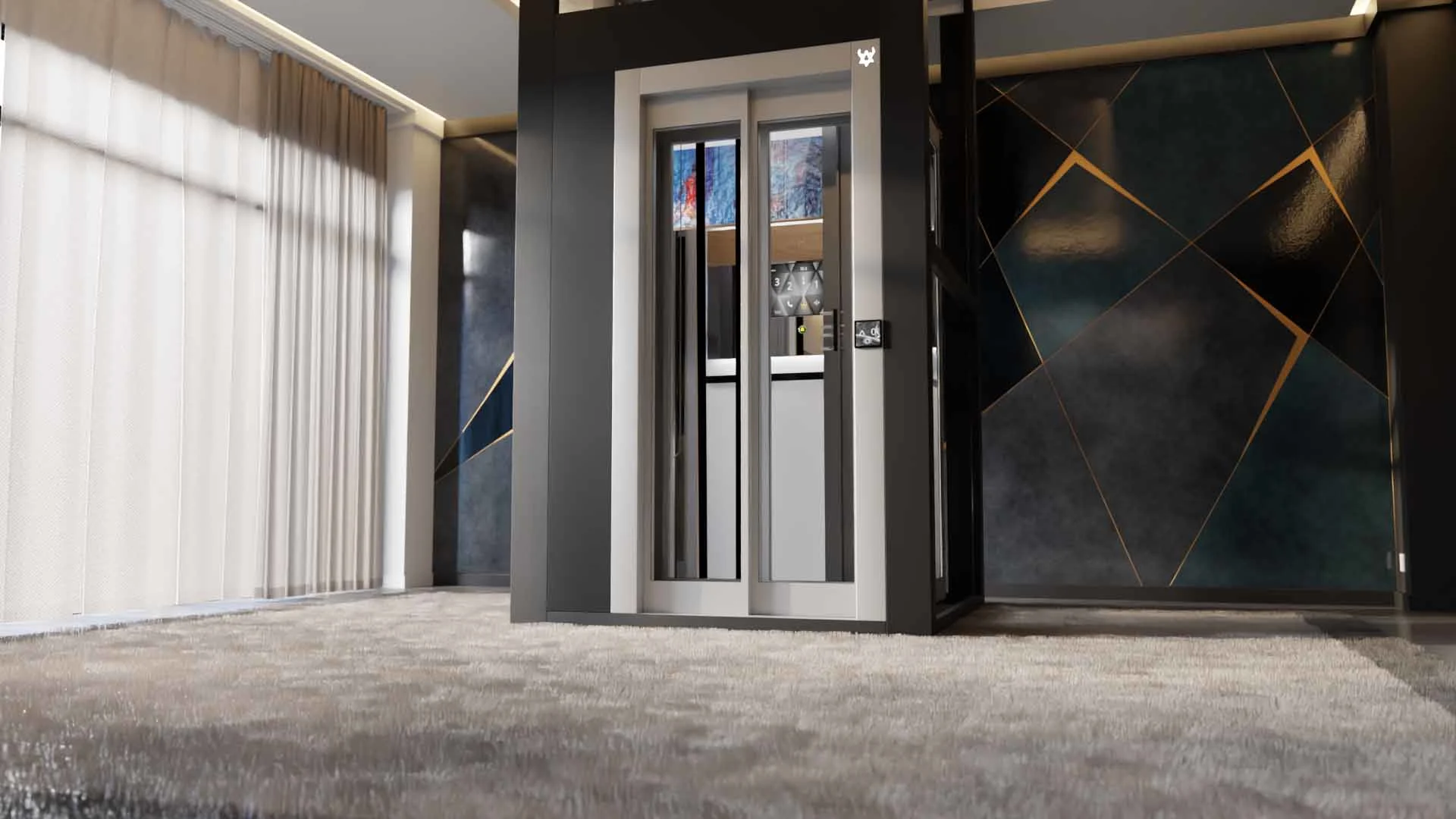
Before comparing the two, it helps to be clear about what each one actually is.
Home elevators
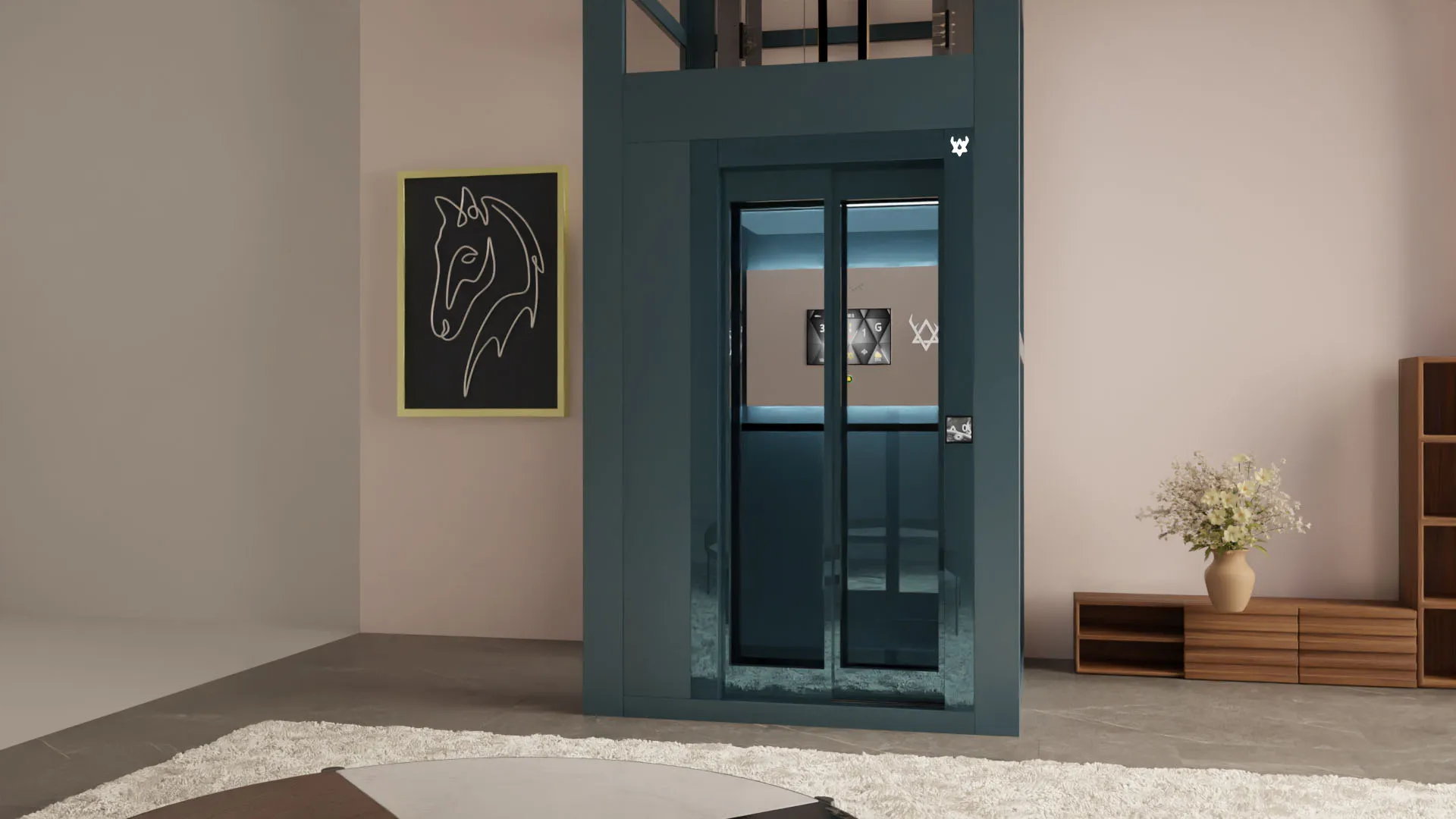
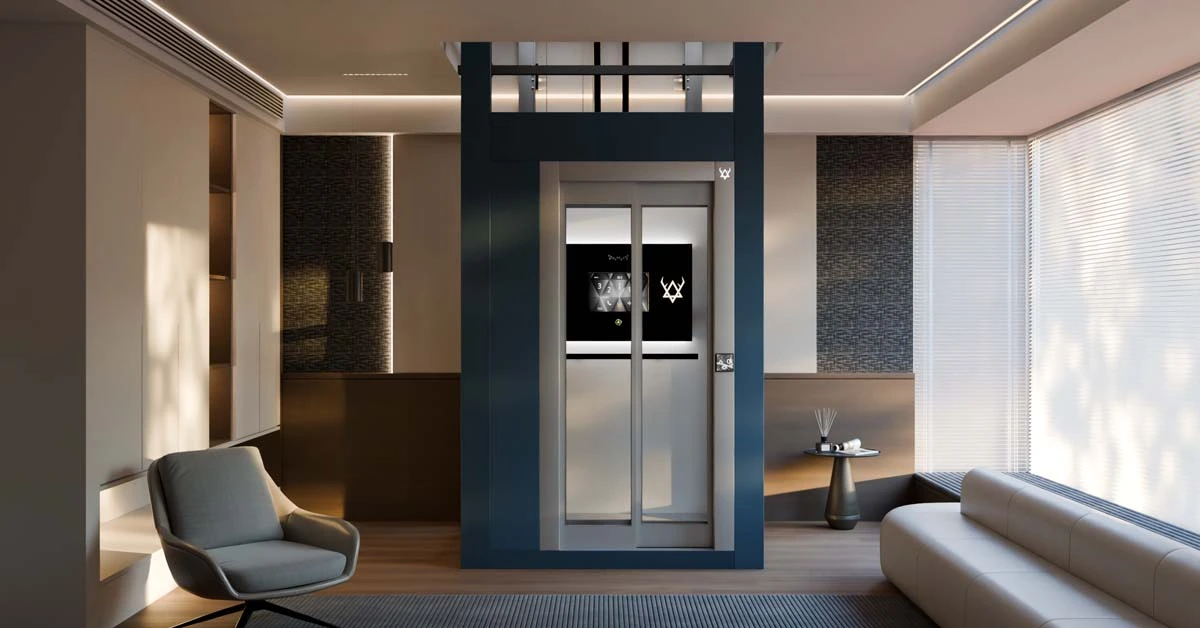
A home elevator is a compact lift designed for private residences — villas, duplexes, and independent houses. You will also hear them called residential elevators or domestic lifts. In India, these terms are used interchangeably. The cabin is sized for a household, the machinery is compact, and the installation is designed to fit within a home's existing architecture without major reconstruction.
Commercial elevators
A commercial elevator is built for public and high-traffic buildings — offices, hotels, hospitals, malls, and large apartment complexes. It carries far more passengers and heavier loads, travels greater distances, and operates under stricter regulations because the public depends on it every day.
Both move people between floors. But they are designed around entirely different assumptions about who uses them, how often, and under what rules.
Why the Difference Matters for Indian Homeowners
The gap between a home lift and a commercial lift is not just a technical footnote. For Indian homeowners, it directly affects what is practical.
Most homes were not built with a lift in mind
The majority of Indian families consider a lift only after the home is built and lived in — when a parent's mobility changes or the stairs start to feel like a daily challenge. A commercial-style installation, with machine rooms and heavy structural support, simply does not fit that reality. A home elevator is designed to work around what already exists.
Usage is completely different
A commercial lift may make hundreds of trips a day. A home lift serves a handful of family members a few times a day. That difference in usage frequency is exactly why the two are engineered, regulated, and priced differently.
Space is limited and precious
Urban plots are compact, and every foot of floor space matters. Home elevators are designed to fit into spaces that a commercial lift could never use — beside a staircase, in a corner, or along an unused wall.
Cost expectations need to be realistic
Homeowners who compare a home lift quote against commercial elevator pricing — or vice versa — often get confused about why the numbers are so different. Understanding what drives each type of cost makes budgeting far simpler.
Home Elevators vs Commercial Elevators — The Key Differences
Here is how the two compare across the factors that matter most.
1. Size and space requirements
Home elevators are designed to be smaller and more compact so they fit into private homes where space is often limited. They are not required to meet the same size standards as commercial lifts, which means they can be designed around a home's architectural constraints without significant modifications. Many models can also accommodate a wheelchair, making them a practical accessibility solution for residents with mobility challenges.
Commercial elevators must meet strict size requirements because they operate in public spaces and high-traffic environments. They are generally larger to carry more passengers and to meet accessibility standards set by government regulations. This design lets them handle heavy, frequent use without compromising safety or efficiency.
2. Safety features and regulations
Home elevators come with essential safety features such as emergency brakes, alarm systems, and interlocks. Because they serve a private household, the regulatory standards are tailored to lower usage frequency and the different risk factors of a home setting. That does not mean safety is compromised — it means the requirements are matched to how a home lift is actually used.
Commercial elevators face much stricter safety regulations because they serve the public. They must comply with local, state, and national codes, including government guidelines. Advanced safety mechanisms such as fire service operation, emergency lighting, and communication systems are standard, and regular inspections and maintenance are mandatory to stay compliant.
3. Weight capacity and travel distance
Home elevators typically have a smaller weight capacity, usually up to around 500 kg. That is enough for a household — passengers plus everyday loads like groceries or luggage. Travel distance is also limited, generally covering up to four or five floors, which suits multi-storey homes but not tall buildings.
Commercial elevators are built for far greater loads, often up to 5,000 kg. This allows them to move large groups of people, heavy equipment, and goods efficiently. They can also cover much greater vertical distances — often up to 300 metres with multiple stops — making them ideal for office towers, hotels, and other large buildings designed to withstand continuous use.
4. Installation and maintenance
Home elevators are far less invasive to install. Compact machinery and a smaller footprint mean no extensive structural modifications or large machine rooms, so a lift can be integrated into existing spaces with minimal disruption. Maintenance is simpler too, and periodic servicing by a qualified service provider is usually enough to keep it running smoothly.
Commercial elevators involve significant planning and structural considerations. They often need machine rooms and substantial support structures to operate safely. Maintenance is more complex and requires a dedicated team of professionals for regular inspections, repairs, and updates, ensuring the lift stays compliant and reliable in high-traffic conditions.
Home vs Commercial Elevators at a Glance
Every situation is different, but this table helps you see the core differences side by side before you speak to any company.
Factor | Home Elevators | Commercial Elevators |
Cabin Size | Compact, fits within a home's layout | Larger, built for more passengers |
Weight Capacity | Typically up to around 500 kg | Often up to 5,000 kg |
Travel Distance | Usually up to four or five floors | Can serve very tall buildings, up to 300 metres |
Usage Frequency | Low — private household | Continuous — high-traffic public use |
Safety Regulations | Tailored to private residential use | Stricter local, state, and national codes |
Machine Room | Often not required on compact models | Commonly required |
Installation | Minimal structural changes | Significant planning and support structures |
Maintenance | Simpler, periodic servicing | Complex, dedicated professional teams |
Cost | Lower, based on floors, technology & finish | Higher, based on capacity & compliance |
Best For | Villas, duplexes, independent houses | Offices, hotels, hospitals, malls |
Types of Home Elevators Available in India
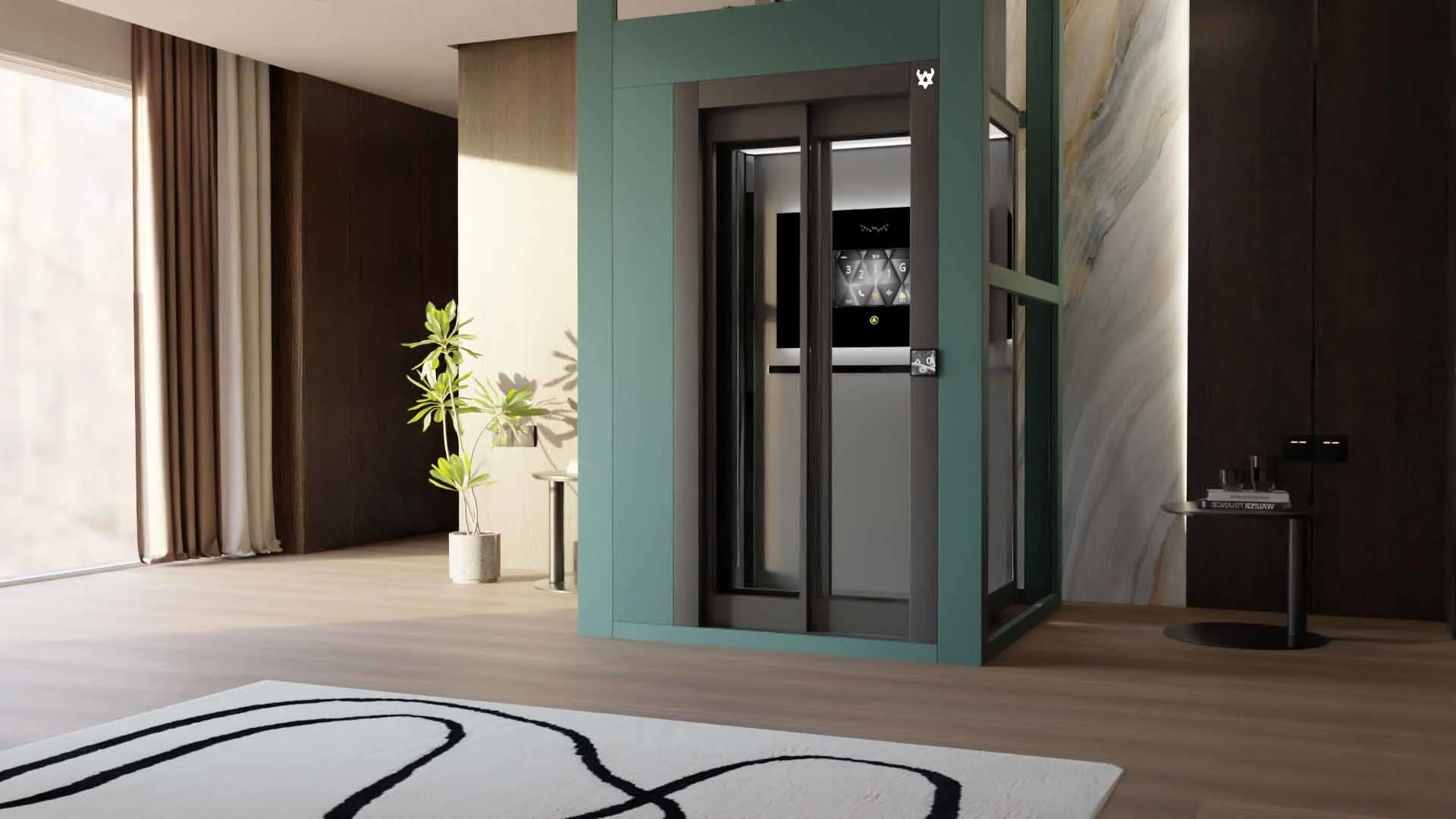
If a home elevator is the right fit, the next question is which technology. Each works differently, and the right choice depends on your space, floors, and priorities.
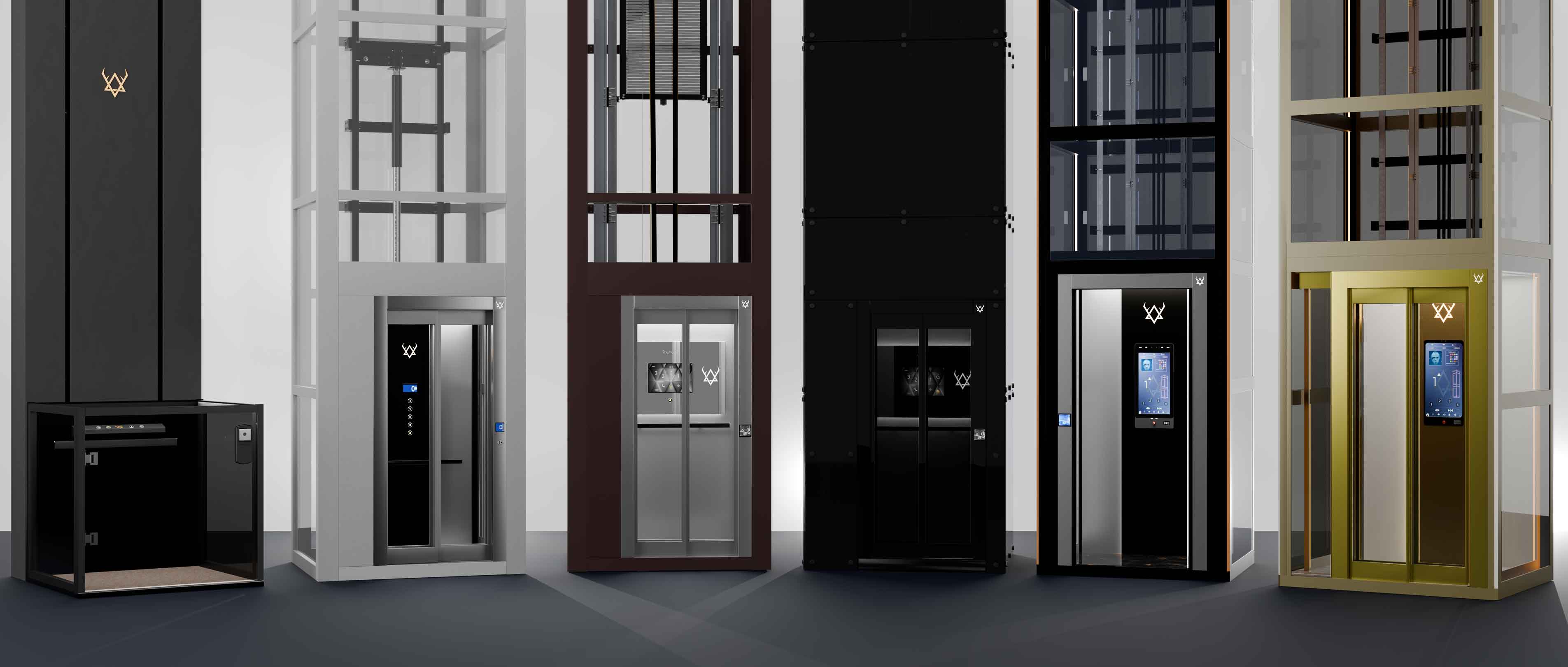
Hydraulic Home Elevators
Hydraulic technology moves the cabin using fluid pressure and a piston system. It handles heavier loads well, fits into compact shaft spaces, and does not demand complex overhead structures. For homeowners who want reliability at a practical starting price, hydraulic home elevators like Stag's SE-2 are built around exactly this need.
Gearless Belt-Drive Home Elevators
Gearless technology prioritises ride experience. A belt-drive motor with a counterweight delivers smooth, near-silent operation — a noticeable difference in homes where the shaft sits close to bedrooms or living areas. Stag's SE-3 gearless belt-drive elevator brings this into compact spaces without needing extra headroom or a machine room.
Ultra Gearless Home Elevators
For homeowners who want a premium experience, ultra gearless technology removes every compromise. There is no oil and no greasing, and select models come with zero AMC. Stag's SE-3 Ultra Gearless elevators are built for homes where performance and interior design matter equally.
Custom Platform Lifts
For specific accessibility needs, platform lifts offer a space-efficient solution that can be adapted to a wide range of sizes and designs. They are worth discussing with your elevator company alongside the standard options.
Which Elevator Do You Actually Need?
For most homeowners, the answer becomes clear once you look at how the lift will be used.
A home elevator is almost certainly right if:
You are installing a lift in a villa, duplex, or independent house for family use. Usage is low, the number of floors is limited, and space is tight. This is exactly what residential elevators — also called domestic lifts in India — are designed for. To explore this further, read our guides on residential elevators and domestic lifts in India.
Your home is already built and occupied. A home elevator is engineered to fit around what exists, with minimal civil work and disruption.
You want a predictable, long-term cost. Certified home lifts with low or zero AMC keep ownership costs easier to plan.
A commercial elevator is the right choice if:
The building serves the public or a large number of occupants — offices, hotels, hospitals, or large apartment complexes — where capacity, fire-service operation, and compliance requirements are higher.
It is worth discussing further if:
Your building has mixed use — for example, a home with a commercial space attached, or a large multi-family property. In these cases, confirm the applicable regulations with your local authority and elevator provider before deciding.
Common Mistakes to Avoid When Choosing a Lift
Most regrets come from decisions made before the lift company ever visits the site. These are the mistakes that come up most often.
Treating home and commercial standards as interchangeable
A lift built for a home is not designed for continuous public use, and a commercial lift is far more than most homes need. Choosing based on a vague idea of "a lift is a lift" leads to mismatched quotes and mismatched products.
Choosing based on capacity alone
A higher weight capacity does not make a lift better for a home. It adds cost and space requirements you may never use. Match the capacity to your household's real needs.
Picking a technology before seeing the space
Many homeowners research lift types online, pick one, and then discover it does not suit their shaft space or floor height. Technology selection should follow a site assessment, not precede it.
Choosing a company on price alone
A lower quote from an uncertified manufacturer looks attractive until the annual maintenance bills arrive — or something fails. In a home where the lift is used daily, certification and after-sales support matter far more than the lowest day-one price.
Ignoring noise levels
In a home, the shaft often runs close to bedrooms or living areas. A noisy technology becomes a daily irritation that cannot be fixed without replacing the system. Always ask about noise before committing.
Why Stag Elevators for Your Home?
Choosing the right company matters as much as choosing the right lift. Stag Elevators specialises in premium home elevators, crafted in collaboration with top Italian manufacturers and tailored to each customer's specifications.
Custom-engineered around your home
No two homes have the same shaft space, wall conditions, or floor layout. Stag Elevators does not offer fixed standard units. Every lift is designed around your home's actual space, with fully customisable interiors, fixtures, and doors so it blends with your décor.
TÜV SÜD certified safety
Every Stag home elevator carries independent TÜV SÜD certification — verified by a globally recognised third party, not just the manufacturer. For a lift your family uses every day, independently tested safety is a baseline requirement.
Zero AMC on select models
Predictable long-term costs matter for a lift used daily over many years. Stag Elevators offers zero annual maintenance charges on select models, making total ownership significantly easier to plan.
Minimal civil work by design
Stag home elevators are engineered with no pit, no headroom, and no machine room requirements, and can operate on both single-phase and three-phase electricity. Advanced error notification helps identify and resolve issues quickly. This keeps disruption low, especially in existing homes.
End-to-end in-house support
From the first site visit through manufacturing, installation, and after-sales service, Stag Elevators handles everything with one team. You are also welcome to visit a Stag Experience Center to see and experience the lifts before you decide.
Get in Touch With Stag Elevators
Every home is different — and the only way to know exactly which lift suits your space, your layout, and your budget is through a proper site visit. The Stag Elevators team will assess your available space, recommend the right technology, and give you a transparent, no-obligation quote.
No guesswork. No standard sizes. A solution built around your home.
Contact Stag Elevators Today:
📞 India: +91-9900111082
✉️ Email: info@stagelevators.com
Final Thoughts
Home elevators and commercial elevators serve the same basic purpose, but they are built for very different worlds. One is engineered around a family, a floor plan, and a few trips a day. The other is built for crowds, heavy loads, and constant public use.
The decision becomes straightforward when approached in the right order. Understand how the lift will be used. Choose the right technology for your space and floors. Insist on independent safety certification. And work with a company that engineers around your home rather than fitting a standard unit into a space it was never designed for.
Get that right, and a home lift is one of the most practical additions you can make — one that will keep serving your family comfortably for years to come.
Frequently Asked Questions
1. What is the main difference between home elevators and commercial elevators?
Home elevators are compact lifts designed for private residences with low usage, smaller capacity, and shorter travel. Commercial elevators are built for public, high-traffic buildings, with larger capacity, longer travel distances, and stricter safety regulations.
2. Can a home elevator be used in a commercial building?
Generally, no. Home elevators are not designed for continuous, high-traffic use and are not built to commercial safety and capacity requirements. If a building has public or commercial use, check the applicable regulations before choosing a lift.
3. What is the weight capacity of a home elevator?
A home elevator typically carries up to around 500 kg, depending on the model. That is enough for a household's passengers and everyday loads such as groceries or luggage.
4. How many floors can a home elevator serve?
Most home elevators serve up to four or five floors, making them suitable for multi-storey homes, duplexes, and villas.
5. How is home lift price different from commercial elevator cost?
Home lift price depends mainly on the number of floors, technology, cabin size, finish, and site conditions, and is generally lower than commercial elevators. Commercial lifts cost more because of higher capacity, machine rooms, fire-service features, and compliance requirements.
6. Are residential elevators and domestic lifts the same thing?
Yes. Residential elevators, domestic lifts, and home lifts all refer to elevators designed for private homes. The terms are used interchangeably, with "domestic lifts" being common in India.
7. Do home elevators need a machine room or pit?
Not always. Many compact home elevators, including Stag's, are designed to work with no pit, no headroom, and no machine room, which keeps civil work minimal.
8. Can a home elevator accommodate a wheelchair?
Yes. Many home elevator models can be configured for wheelchair access, with cabin size and door width customised to suit the user's needs.
Author Bio

Vinoth Kannan
Vinoth Kannan is the CTO and Co-Founder of Stag Elevators, bringing years of technical expertise in designing safe and reliable home elevator systems. He leads the engineering, product innovation, and TÜV SÜD-certified quality processes that power Stag’s European-standard home lifts. His work ensures homeowners receive trusted, high-performance elevator solutions built for the future.
Ready to Install a Home Elevator in Your Home?
Get a personalized quote and expert guidance from Stag Elevators.