Home Lift Price in Hyderabad & Telangana: Complete Cost Overview (2026)

Home lift price in Hyderabad and Telangana with technologies, costs, and installation details.

Table of Contents

What is the Home Lift Price in Hyderabad?

home lift price in hyderabad

Home lift prices in Hyderabad and across Telangana typically start from ₹15 lakhs and can go up to ₹50 lakhs or more, depending on the elevator technology, number of floors, cabin design, and installation requirements. With the growing number of villas, duplex houses, and independent homes in Hyderabad, many homeowners are installing residential elevators to improve accessibility, comfort, and long-term property value.

With the increasing number of multi-storey villas, duplex houses, and independent homes, many homeowners are choosing to install home elevators in Hyderabad for convenience, accessibility, and modern living.

Today, homeowners can choose from several home elevator technologies, including gearless elevators, hydraulic lifts, platform lifts, vacuum lifts, and screw-driven home lifts. Each technology offers different benefits in terms of space requirements, installation complexity, ride comfort, and overall cost.

In this guide, we explain the home lift price in Hyderabad and Telangana, available lift technologies, factors affecting the cost, space requirements, safety standards, and installation considerations to help homeowners choose the right residential elevator for their property.

Several residential elevator technologies and home lift systems are available today, each designed to suit different house layouts, mobility needs, and installation conditions.

The cost of a residential elevator is largely influenced by the technology used. Understanding the different types of home lift systems available in Hyderabad can help homeowners choose the most suitable option based on space availability, building structure, and budget.

What Technologies Are Available for Home Lifts in Hyderabad?

Homeowners looking for home elevators in Hyderabad can choose from several types of residential lift technologies, depending on the available space, number of floors, and installation requirements.

Below are some of the most commonly used residential lift technologies.

Gearless Home Elevators 

Gearless home elevators operate using a motor-driven traction system combined with belts or steel ropes and a counterweight. The motor moves the lift car by rotating the traction sheave, allowing the cabin and counterweight to travel smoothly between floors.

This technology is considered one of the most advanced systems used in the home elevator industry, offering high performance and precise movement.

Gearless elevators are known for their ultra-smooth travel, quiet operation, and long-term reliability, making them a popular choice for premium villas and multi-storey residential homes.

Compared to other residential lift technologies, gearless elevators usually have a higher overall cost, but they provide excellent ride comfort, energy efficiency, and low maintenance requirements over time.

Hydraulic Home Elevators

Hydraulic home elevators operate using a hydraulic piston and fluid pressure system to move the lift cabin between floors. In this system, a hydraulic pump pushes oil into a cylinder, which moves the piston and lifts the elevator cabin upward.

Hydraulic lifts are commonly used in low-rise residential buildings and villas, especially for homes with two to four floors.

One of the key advantages of hydraulic home elevators is their smooth and stable operation, making them suitable for residential environments. They are also known for their strong lifting capability and reliable performance.

Compared to some advanced lift technologies, hydraulic elevators are often considered a practical and cost-effective solution for home installations, particularly when the building height is limited.

Platform Lifts

Platform Lifts are designed mainly to improve accessibility within residential buildings, especially for elderly users and wheelchair users. Unlike traditional elevators, platform lifts operate with a simple lifting platform that moves vertically between floors.

These lifts are commonly installed in homes where limited space is available or where a full elevator installation may not be required. Platform lifts usually serve one or two floors, making them suitable for small residential buildings or accessibility needs.

One of the main advantages of platform lifts is their compact design and simple installation requirements. They also require minimal structural modifications compared to conventional home elevators.

Platform lifts are often chosen by homeowners who need a practical and space-efficient mobility solution inside the house.

Vacuum Home Lifts

Vacuum home lifts operate using air pressure technology inside a sealed cylindrical tube. The lift cabin moves between floors by controlling the air pressure above and below the cabin.

These lifts usually do not require a traditional shaft or machine room, which makes them an option for homes where space is limited.

However, many homeowners are cautious about vacuum lifts due to safety concerns such as vacuum leakage, air pressure dependency, and long-term reliability. Because of this, they are generally considered only when there is no space available for conventional home elevator installations.

Screw-Driven Home Lifts

Screw-driven home lifts operate using a motorized screw and nut mechanism that moves the lift cabin vertically between floors. When the motor rotates the screw, the lift platform travels up or down along the threaded system.

These lifts are known for their compact design and simple mechanical operation, which allows them to be installed in homes with limited space availability.

However, screw-driven lifts are considered a relatively older technology in the elevator industry and may involve higher maintenance requirements over time due to the mechanical components involved.

Homeowners often compare different home lift technologies before choosing the right system for their house. Each technology works differently and offers specific advantages in terms of performance, space requirements, and maintenance.

Lift Technology Working Mechanism Key Advantages Limitations
Gearless Home Elevators Motor-driven traction system with belts/ropes and counterweight Ultra-smooth travel, energy efficient, long-term reliability Higher overall cost compared to other technologies
Hydraulic Home Elevators Hydraulic piston powered by fluid pressure Smooth operation, strong lifting capability, widely used for homes Requires hydraulic system components and proper space planning
Platform Lifts Vertical platform lifting system Compact design, accessibility friendly, minimal structural changes Limited travel height and lifting capacity
Vacuum Home Lifts Air pressure technology inside a sealed cylindrical tube Shaftless design and compact installation Concerns about vacuum leakage and long-term reliability
Screw-Driven Home Lifts Motor rotates a threaded screw to move the lift cabin Simple mechanical system and compact installation Older technology with higher maintenance requirements

Understanding these technologies helps homeowners choose a suitable lift system based on space availability, number of floors, advantages, and limitations.

What is the Home Lift Price in Hyderabad & Telangana?

The home lift price in Hyderabad and across Telangana generally starts from ₹15 Lakhs and can go up to ₹50 Lakhs or more, depending on the residential elevator technology, number of floors, cabin specifications, and installation requirements.

In many villas and independent houses, the residential elevator cost varies based on the lift system used. Advanced technologies such as gearless home elevators usually have a higher price range, while simpler mobility solutions like platform lifts may have a lower starting cost.

Homeowners planning a villa lift installation in Hyderabad often compare different elevator systems to understand the overall home elevator pricing and long-term value.

The following table provides an approximate comparison of home elevator price ranges in Hyderabad based on commonly used residential lift technologies.

Lift Technology Approximate Price Range
Gearless Home Elevators ₹18 Lakhs – ₹50 Lakhs
Hydraulic Home Elevators ₹15 Lakhs – ₹35 Lakhs
Platform Lifts ₹12 Lakhs – ₹20 Lakhs
Vacuum Home Lifts ₹12 Lakhs – ₹25 Lakhs
Screw Driven Home Lifts ₹18 Lakhs – ₹30 Lakhs

The final home elevator cost may vary depending on several factors, such as the number of stops, lift capacity, cabin customization, building structure, and residential lift installation conditions. A professional site inspection is usually required to determine the exact residential lift price for a specific property.

Note: The prices mentioned above are approximate estimates based on general industry ranges for residential elevators.

What Factors Affect Home Lift Price in Hyderabad?

The home lift price in india can vary depending on several technical and structural factors. Residential elevator pricing is usually determined based on the lift system, building requirements, and customization options.

Number of Floors (Stops)

The number of floors the lift needs to serve plays an important role in determining the overall cost. A home elevator installed for two floors will generally cost less compared to a lift designed for four or five floors.

Lift Technology

Different residential elevator technologies have different price ranges. Advanced systems like gearless home elevators usually cost more due to their performance and design, while systems such as platform lifts or basic residential lift models may have a lower starting price.

Cabin Size and Customization

Homeowners can customize the lift cabin design, materials, and finishes according to their interior preferences. Options such as glass panels, stainless steel finishes, designer lighting, and touch control panels can influence the final home elevator price.

Space Availability and Building Structure

The available space inside the house also affects the lift installation process. Factors such as shaft size, pit depth, and headroom requirements may require additional structural planning, which can impact the overall project cost.

Installation Conditions

The installation environment can also affect pricing. Installing a lift in a new construction project is usually easier compared to installing a residential elevator in an existing building, where structural modifications may be required.

Space Requirements for Installing a Home Lift

The space required for installing a home lift in Hyderabad or Telangana mainly depends on the lift technology, cabin size, and the number of floors the elevator needs to serve. Most residential elevators do not require a no pit, no machine room and no headroom as well. Unlike commercial elevators, they need a deep pit and bulky machine room, and headroom as well for the operations.

In villas and duplex houses, home lifts are commonly installed inside the staircase area, beside the staircase, or in a separate external shaft structure, depending on the available space and building layout.

Unlike commercial elevators that usually come in standard fixed sizes, residential elevators are typically custom-designed to suit the available space in the house. For example, at Stag Elevators, home lifts can be designed for compact spaces starting from 3 ft × 3 ft up to 6.5 ft × 6.5 ft, allowing homeowners to install a lift even in space-constrained villas or independent houses.

A detailed site inspection and technical evaluation are usually required to determine the most suitable lift size and installation layout for the property.

Safety Standards & Certifications for Home Lifts

Safety is a critical factor when selecting a residential elevator for a home. Modern home lifts are designed with essential safety features such as door safety sensors, emergency stop systems, overload protection, alarm systems, and backup power options to ensure safe operation for users.

However, in the home elevator market, some providers offer lifts at very low prices with minimal safety standards and limited certification. In many cases, local vendors enter the market and supply basic lift systems without following proper engineering standards or quality verification processes. This can raise concerns regarding long-term reliability and user safety.

One of the most respected certifications in the elevator industry is the TÜV SÜD certification. TÜV SÜD is an independent third-party organization that performs rigorous safety testing, inspection, and certification to ensure elevator systems meet strict international safety requirements.

Elevators certified by TÜV SÜD typically follow European home elevators safety standards such as EN 81-41 and EN 81-50, along with other stringent European engineering norms. These standards are designed to ensure high levels of passenger safety, mechanical reliability, and long-term performance in residential elevator systems.

Why Choose Stag Elevators?

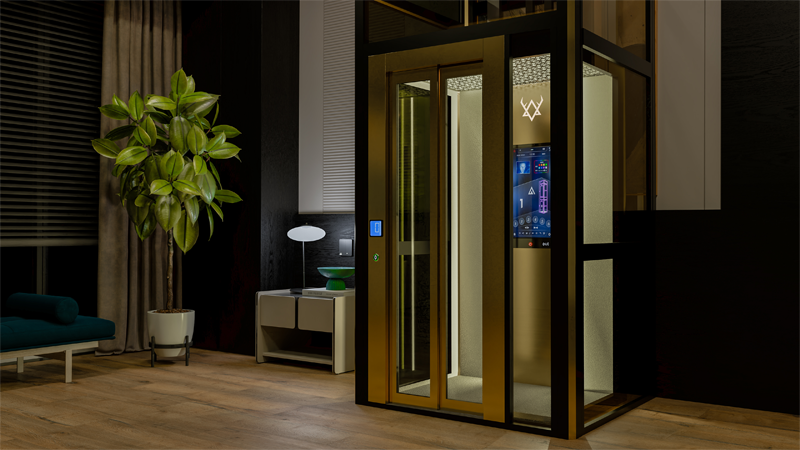
Stag Elevators specializes in providing premium home elevators, offering customized residential lift solutions designed specifically for modern homes. Our advanced home lift systems feature flexible installation options, making it easy for homeowners to install elevators even in space-constrained houses.

Some of the key advantages offered by Stag Elevators include:

  • No pit, no headroom, and no machine room.

  • No government license required for installation in residential properties.

  • Operates on a single-phase power supply, suitable for most homes.

  • Multiple home lift technologies are available to suit different needs.

  • TÜV SÜD certified safety standards.

  • In-house installation and technical teams for professional setup.

  • Dedicated after-sales service and maintenance support.

  • Pan-India installations and customer support.

  • Customization options at no additional cost on selected models.

  • Tailor-made residential lifts designed according to the available space.

Stag Elevators focuses on delivering safe, space-efficient, and customized home lift solutions for modern residential buildings. With certified safety standards, advanced technologies, and dedicated installation teams, the company aims to make home elevator installation simple, reliable, and accessible for homeowners across India.

Installations Done Across Hyderabad and Telangana by Stag Elevators

We have completed multiple home elevator installations across Hyderabad in premium residential locations.

Some of our installations include projects in Mahavir Palm Grove – Begumpet, Sri Enclave – Yellareddyguda, Mehdipatnam, Jubilee Hills, and Banjara Hills, where homeowners trusted Stag Elevators for safe, customized, and space-efficient home lift solutions.

Our experienced in-house installation team ensures smooth project execution, precise customization based on the home layout, and reliable after-sales support for every installation.

If you are planning to install a home elevator, our team can guide you with the right technology, safety standards, and customization options suitable for your home.

Get Home Lift Price in Hyderabad – Contact Us

If you are planning to install home elevators in Hyderabad or want to know the exact price for your property, feel free to connect with our team for guidance and site evaluation.

India: +91-9900111082
Dubai: +971-567894252
Email: info@stagelevators.com Website: https://stagelevators.com/contact-us/
Our experts will help you understand the right residential lift technology, space requirements, and estimated price based on your building structure.

Home Lift Price in Telangana

The home lift price in Telangana generally falls within the same range as Hyderabad, starting from around ₹15 Lakhs, depending on the elevator technology, number of floors, and installation conditions. Residential elevators are increasingly being installed in villas and independent houses across many cities in Telangana.

faqs
Frequently Asked Questions
  • 1. What is the average home lift price in Hyderabad?
    The average home lift price in Hyderabad usually starts from ₹15 lakhs and can go up to ₹50 lakhs, depending on the elevator technology, number of floors, cabin size, and customization options. Residential lift prices may also vary based on installation requirements and building structure.
  • 2. What factors affect home elevator prices in Hyderabad?
    Home elevator prices in Hyderabad depend on several factors such as lift technology, number of stops, travel height, cabin size, interior customization, and installation conditions. The final residential lift price is usually determined after a professional site inspection and technical evaluation.
  • 3. What technologies are used in home elevators?
    Home elevators in Hyderabad are available in different technologies, including gearless traction elevators, hydraulic lifts, platform lifts, vacuum elevators, and screw-driven systems. Each technology differs in terms of space requirements, ride comfort, maintenance, and overall cost.
  • 4. What is the minimum space required for a home lift installation?
    The minimum space required for a home lift installation typically starts from around 3 ft × 3 ft, depending on the elevator system and cabin design. Some modern residential elevators are designed for compact homes and can be customized to fit limited spaces.
  • 5. Do Stag Elevators provide customized home lifts?
    Yes, Stag Elevators provides tailor-made home elevators designed to match the available space and architectural layout of the house. Unlike commercial elevators with fixed sizes, residential lifts can be customized based on space, design preferences, and home requirements.
  • 6. Does Stag Elevators provide installation and after-sales support?
    Yes, Stag Elevators has in-house installation teams and dedicated technical experts who handle elevator installation, testing, and commissioning. The company also provides reliable after-sales support and maintenance services to ensure long-term elevator performance.
  • 7. Are safety certifications important for home elevators?
    Yes, safety certifications are important because they ensure the elevator system meets strict safety and quality standards. Certified residential elevators undergo rigorous testing, inspection, and compliance checks before installation.
  • 8. What safety certification is important for residential elevators?
    One of the most respected safety certifications in the elevator industry is TÜV SÜD certification, which verifies that the elevator complies with international safety standards and European norms such as EN 81-41 and EN 81-50.

Conclusion

Installing a home elevator can significantly improve comfort, accessibility, and property value in modern residential buildings. The home lift price in Hyderabad and Telangana generally ranges from ₹15 lakhs to ₹50 lakhs, depending on the lift technology, customization, and installation requirements.

Before choosing a residential elevator, homeowners should carefully consider space availability, lift technology, safety standards, and certifications to ensure long-term reliability and safety. Working with an experienced elevator company can help you select the right home lift solution tailored to your building structure and usage needs.

If you are planning to install a home elevator, consulting with experts can help you understand the best technology, space requirements, and estimated price suitable for your home.

Author's Bio

Picture of Vinoth Kannan

Vinoth Kannan

Vinoth Kannan is the CTO and Co-Founder of Stag Elevators, bringing years of technical expertise in designing safe and reliable home elevator systems. He leads the engineering, product innovation, and TÜV SÜD–certified quality processes that power Stag’s European-standard home lifts. His work ensures homeowners receive trusted, high-performance elevator solutions built for the future.

Leave a comment

Submit Your Details
Download Our Brochure
Want Help?
We Are Here to Talk!

Enquire Now
Want to know more about Stag Elevators?
We Are Here to Talk!
Enquire Now
Submit Your details &
Get Callback Shortly